


“LORD, you have seen this; do not be silent. Do not be far from me, Lord” (Psalm 35:22, NIV).

In 2024, I invited my readers to email me their stories about healing from rejection. I thought a few dozen people might take me up on it. Instead, thousands of heartfelt emails poured in.
As I read them, I noticed a common thread — one echoed in an email from a woman named Beth. After being deeply hurt by her husband, Beth wrote: “I’ve forgiven him, but I'm still angry about it! Why am I still feeling this way after forgiving him?”
Beth’s question is one many of us carry, if we’re honest. If forgiveness is the solution to being hurt, why are we still angry after forgiving? I believe it’s because forgiveness and healing are not the same thing.
Imagine you’re riding your bike, and someone veers into the lane and breaks your leg. Even if you forgive them, you still have a broken leg. Left untreated, it gets infected, eventually costing you the limb. Many of us are limping through life with the emotional equivalent of a broken, infected, amputated heart. So how do you heal the wound that remains after the offense? Let’s ask David in the Bible.
Most of us know David as the shepherd boy who defeated Goliath and became king of Israel. But between those milestones, David became the target of King Saul’s murderous jealousy — betrayed, slandered, and hunted for 10-15 years, though he’d done nothing to deserve it.
Here’s where it gets interesting. David once had the chance to kill Saul in a cave, but he refused — he even ran out to prove he meant no harm (1 Samuel 24:12-13). However, Saul kept trying to kill him anyway. It was in that exasperation that David modeled how to handle the anger that remains after forgiveness, especially when the offender isn’t sorry: David prayed.
But he didn’t pray pretty, cotton-candy prayers. In Psalm 35, David prayed out his pain — raw, unfiltered, honest — asking God to vindicate him against Saul and bring about justice: “LORD, you have seen this; do not be silent. Do not be far from me, Lord” (Psalm 35:22). In nearly 30 psalms like this one, called imprecatory psalms, David shows us the power of honest prayer when forgiveness doesn’t heal.
God Himself sought David as a man after His own heart (1 Samuel 13:14). If David could pray honestly, admitting the anger, anguish, and even the desire for revenge, why do we believe we have to pretend we don’t feel the way we feel? Pain that isn’t fully processed doesn’t disappear just because we forgive. Instead, it gets suppressed. So what would happen if you externalized your pain by expressing it honestly to the God who already knows exactly how you feel?
You aren’t wrong for feeling hurt, and God wants to help you heal. Start by getting honest with Him.
God, I need You. I’m tired of pretending I’m OK. What they did to me was wrong, and I ask You to repay them according to Your word. I trust Your justice, and from this day forward, I will bring my hurt to You. In Jesus’ name, amen.
For a practical guide to healing the pain that remains after forgiveness, grab a copy of Nona Jones’ The Power of Petty Prayers: How to Heal Your Hurt When You’re Wounded, Weary, and Just Plain Mad. As Christians, we’re often encouraged to smile through pain, forgive before we’ve finished bleeding, and tame our emotions. We learn how to be gracious but not how to be honest. How to turn the other cheek but not how to handle the pain. In The Power of Petty Prayers, Nona introduces a bold, biblical framework for prayer and reveals how honest prayer is the key to a vulnerable, authentic prayer life.
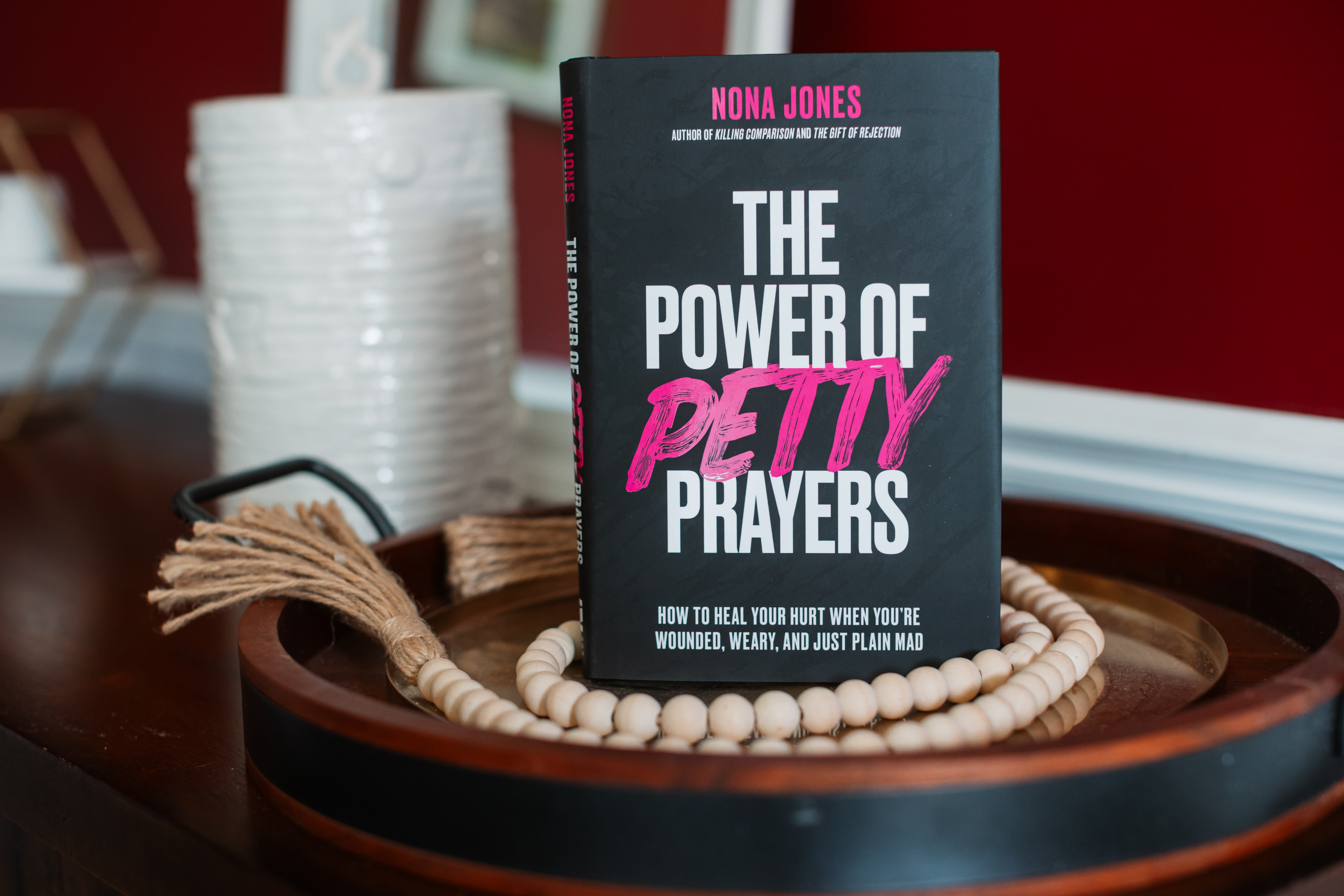
Enter to WIN your very own copy of The Power of Petty Prayers by Nona Jones. To celebrate this book, Nona’s publisher will give away 5 copies! Enter to win by filling out the form here. {We’ll randomly select 5 winners and notify them via email by Monday, October 26, 2026.}
Psalm 35:23-24, “Awake, and rise to my defense! Contend for me, my God and Lord. Vindicate me in your righteousness, LORD my God; do not let them gloat over me” (NIV).
Think of a hurt you’ve experienced. What impact did the offense have on your life, and how can you invite God into the repair required to address it?
We’d love to hear from you! Share your thoughts in the comments.
© 2026 by Nona Jones. All rights reserved.
Proverbs 31 Ministries thanks Zondervan for their sponsorship of today’s devotion.
Click here to view our policy on third-party links.
What We Believe
If your life feels too overwhelming, click here for our care and counseling resources.


Join the Conversation